Setting Up a Vintage Receiver: Connections, Speakers, and First Steps
This post contains affiliate links. As an Amazon Associate, I earn from qualifying purchases at no extra cost to you.
Vintage integrated receivers from the 1960s through the 1980s remain some of the most sought-after pieces of audio equipment available. Brands like Marantz, Pioneer, Sansui, Kenwood, and Sony produced receivers during this era that combined AM/FM tuners, preamplifiers, and power amplifiers in single beautifully designed chassis. If you have just acquired your first vintage receiver, here is how to set it up properly and avoid the most common mistakes.
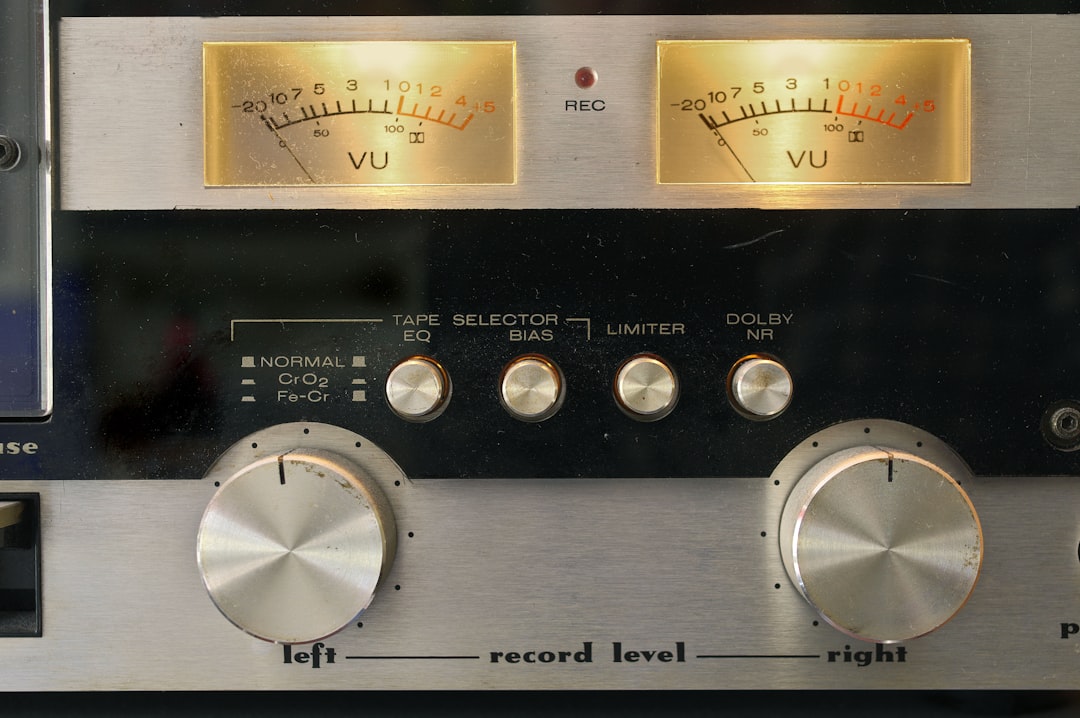
Photo by Immo Wegmann on Unsplash
Before You Power It On
If the receiver has been sitting in storage for years, resist the urge to plug it in and hit the power switch immediately. Electrolytic capacitors in older equipment can fail catastrophically after long periods without power, particularly if they have never been reformed. The responsible approach is to use a variac, which is a variable autotransformer, to slowly bring the voltage up over the course of an hour, allowing the capacitors to reform gradually. If you do not have a variac and cannot borrow one, at minimum plug the receiver into a power strip and turn it on briefly, then off, then on for a few minutes, monitoring for any smoke, unusual smells, or heat from the chassis. If everything seems normal after several short sessions, you can proceed with normal use.
For peace of mind and long-term reliability, having a qualified technician recap the unit before serious use is the right approach for any receiver that has not been serviced. The cost runs $150 to $400 depending on the model and the technician.
Connecting Your Speakers
Vintage receivers typically have binding post or push-terminal speaker connections on the rear panel. Some have separate terminals for 4-ohm and 8-ohm loads. Match the impedance of your speakers to the appropriate terminals: 8-ohm speakers go to the 8-ohm terminals.
When connecting speaker wire, pay close attention to polarity. The positive terminal on the receiver must connect to the positive terminal on each speaker, and the same for negative. Mismatched polarity, with one speaker wired correctly and one reversed, causes the bass frequencies from the two speakers to cancel each other out, producing thin and weak sound. Most speaker wire has a marked conductor (a stripe, ridges, or a different color) to help you track positive and negative consistently.
Keep speaker wire runs reasonably short and keep them away from power cables to avoid introducing hum. For most vintage receivers driving typical room-sized setups, 16-gauge or 18-gauge speaker wire is adequate.
Connecting a Turntable
Most vintage receivers include a dedicated phono input designed for cartridges of that era. This input applies RIAA equalization and provides the correct impedance loading for a moving-magnet cartridge. Simply connect the turntable’s RCA cables to the phono input, and connect the ground wire from the turntable’s tonearm to the grounding post on the receiver. If you skip the ground connection, you will likely hear a 60Hz hum from the speakers whenever the phono input is selected.
If you have a modern turntable without a built-in phono stage, or a moving-coil cartridge, you may need an external phono preamplifier. Most vintage receivers are designed for moving-magnet cartridges and do not have sufficient gain for low-output moving-coil designs.
The Protect Mode and Relay Click
Many vintage receivers, particularly Japanese equipment from the 1970s onward, include a speaker protection relay. When you first power on the receiver, there is a delay of several seconds before the relay clicks and connects the speakers. This is normal and intentional: it protects the speakers from any DC offset that might be present when the amplifier is warming up.
If the relay never clicks, or if it clicks and then disconnects, there may be a fault in the amplifier stage or the protection circuit itself. Do not attempt to bypass a protection relay without understanding why it is tripping.
AudioKarma’s vintage receiver restoration forum has model-specific threads for virtually every classic receiver - a gold mine of schematic links, common fault guides, and restoration tips.
Getting the Best Sound
After setup, give the receiver 20 to 30 minutes to warm up before critical listening. The volume and tone controls on vintage equipment often develop crackling and static from oxidized contacts. Working the controls back and forth through their full range several times can temporarily clear mild oxidation. For a permanent fix, spray a small amount of contact cleaner into the potentiometer opening and work the control again. DeOxit D5 is the product of choice for this task.
Take your time, listen carefully, and enjoy the process of getting to know your vintage gear.
Related Reading
Once your receiver is running, pair it with a turntable. Our Best Budget Turntables for Beginners guide covers what to look for.
Recommended Products
Here are a few products that can help with what we covered in this guide: